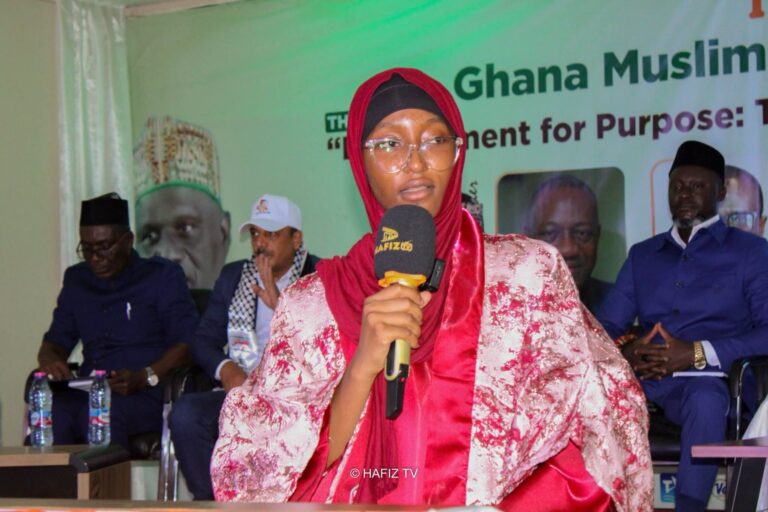
The Ghana Muslim Entrepreneurs and Business Summit 2025 presented entrepreneurship as more than a pursuit of financial gain. The discussions placed business within the broader responsibilities of faith, livelihood and service to society.
The summit emphasised the importance of earning a halal livelihood. Economic activity was presented as a legitimate means of providing for oneself and others while fulfilling one’s responsibilities to the Creator. Business, therefore, can become an expression of faith when it is conducted according to proper ethical principles.
The example of Prophet Muhammad (PBUH) as a merchant was used to demonstrate the place of trade and entrepreneurship within Islamic tradition. Participants were encouraged to see enterprise not simply as a means of making money but as an opportunity to contribute to society.
Purpose was identified as an important part of this approach. The summit argued that achievement begins with a purposeful mind. A focused mind encourages disciplined action, while distraction and laziness can prevent people from making productive use of their abilities.
The concept of halal livelihood also places responsibility on the entrepreneur. Business activity must be conducted honestly and responsibly. The summit therefore connected entrepreneurship with integrity, justice and the refusal to engage in fraudulent practices.
Risk-taking was another important part of the discussion. Entrepreneurs were encouraged to “do and dare” rather than remain inactive because of fear. Taking risks, however, was presented alongside knowledge and awareness of the business environment.
The summit also encouraged entrepreneurs to develop expertise in their chosen fields. Hard work alone is not sufficient. Business owners must understand their industries, remain aware of market conditions and continuously improve their ability to operate effectively.
This approach presents entrepreneurship as both an economic and social responsibility. A successful business can provide livelihoods, create opportunities and contribute to the development of the wider community.
For Muslim entrepreneurs, the message from the summit was clear: business can be pursued as a legitimate and meaningful part of one’s faith when it is built on lawful earnings, knowledge, discipline, honesty and service.